
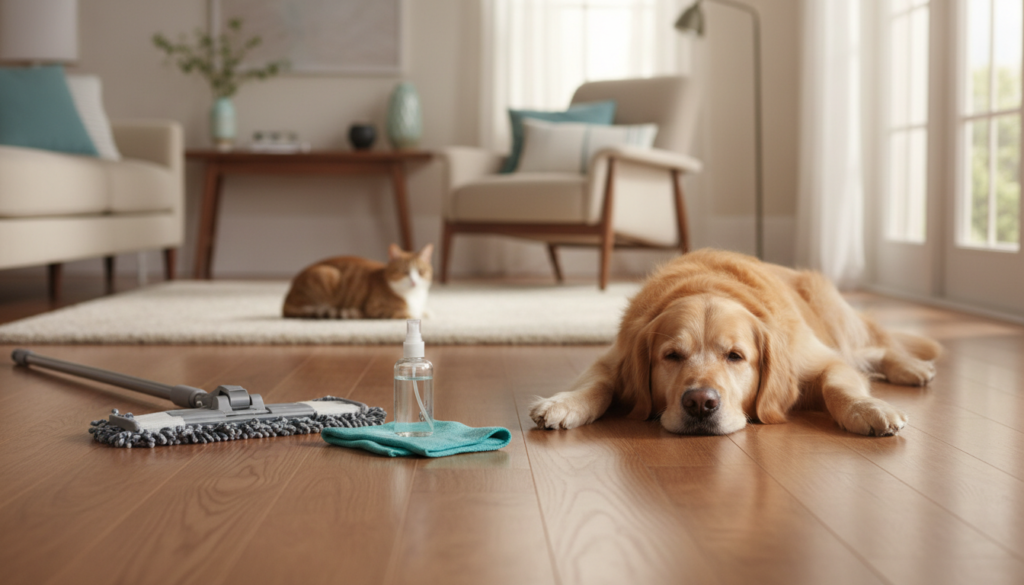
Dogs and cats spend a lot of time close to the floor. They walk over freshly mopped surfaces, groom their paws and sometimes investigate cleaning bottles. That makes a floor cleaner’s ingredients, instructions and drying time worth considering before you bring it home.
The quick answer: Most household floor cleaners can be used in homes with pets when used exactly as directed, according to ASPCA Animal Poison Control. Keep pets out of the room during cleaning, follow any dilution and rinsing instructions, and let the surface dry completely before they return. “Natural” and “pet-safe” on a label do not mean a liquid is safe for an animal to drink or lick.
How to choose a pet-safer floor cleaner
Start with the floor manufacturer’s maintenance advice, then check the cleaning product’s label. Look for clear ingredient information, instructions for your floor material and guidance about use around animals. The US Environmental Protection Agency’s Safer Choice product directory is useful when comparing formulas evaluated for safer ingredients, although certification does not mean a cleaner can be swallowed or left wet around pets.
For ordinary dirt, a mild cleaner can be enough. Strong disinfectants are useful only when disinfection is actually required and when the product is suitable for that surface. Read the label rather than assuming more concentrated cleaner is more effective.
10 practical floor-cleaning options for homes with dogs and cats
1. A dry microfiber mop for everyday dust
Dry microfiber picks up loose dust and fur without leaving cleaner residue behind. It is a sensible first step on many finished floors. Shake or wash the pad away from your pets, especially if it contains collected hair, dust or small debris.
2. A lightly damp microfiber mop for sealed floors
For light footprints or dust, a clean pad dampened with water may be all you need. Use as little water as the flooring manufacturer recommends; excess moisture can seep into joints in wood and laminate flooring.
3. A floor-specific pH-neutral cleaner
Choose a product labeled for your particular flooring, such as sealed hardwood, luxury vinyl or tile. Measure concentrate according to the label. A cleaner that is safe for tile may still damage a wood finish, so compatibility comes first.
4. A fragrance-free option when scent is unnecessary
If strong perfume bothers you or your pets, look for an unscented or fragrance-free product suitable for the floor. Fragrance-free alone is not a safety certification; compare the full directions and other ingredients too.
5. An enzyme cleaner for a urine accident
Pet-urine enzyme cleaners can help break down organic residue when used as directed. Pick a formula approved for your floor type, keep animals away while the spot is wet and allow the recommended contact and drying time. Test an inconspicuous area first.
6. A manufacturer-approved cleaner for sealed hardwood
Wood floors need a product compatible with their finish. Avoid soaking or steam-cleaning wood unless the manufacturer explicitly permits it. For additional surface-specific guidance, read our wood floor cleaning guide.
7. A gentle vinyl-floor cleaner
Vinyl floors are often water resistant, but cleaners with unsuitable solvents or abrasive tools can affect their appearance. Use the manufacturer-recommended solution and wipe up excess liquid so pets do not track residue through the home.
8. A tile-and-grout cleaner used as directed
Tile may tolerate different products from hardwood, but grout and stone finishes need their own care. Do not substitute an acidic household mixture for a surface-specific cleaner without checking compatibility.
9. A disinfectant for situations that actually require one
Routine mopping and disinfection are different tasks. If you need to disinfect after illness or contamination, choose a product approved for the surface and follow its instructions for dilution, contact time, ventilation, rinsing and keeping pets away. Never mix cleaning chemicals.
10. Reusable tools and a clean-water finishing pass
Separate pads used around pet waste from everyday dusting tools. Store bottles, buckets and wet mops out of reach. When a product label calls for rinsing, finish with clean water and allow the floor to dry before your pet enters.
Floor type matters more than a “pet-safe” marketing claim
| Floor | Better starting approach | Avoid without approval |
|---|---|---|
| Sealed wood | Dry dusting and minimal moisture; finish-approved cleaner | Standing water and aggressive scrubbing |
| Laminate | Dry mop and lightly damp manufacturer-approved cleaning | Soaking joints or prolonged puddles |
| Vinyl | Soft mop and compatible mild cleaner | Abrasive powders or unsuitable solvents |
| Tile | Tile-compatible cleaner with suitable grout care | Harsh acids on sensitive stone or grout |
Ingredients and habits to be careful with
Essential oils: Do not add concentrated tea tree, lavender or other essential oils to a homemade floor cleaner simply to make it smell nicer. Cats can be particularly sensitive to essential oils, and concentration and exposure route matter. ASPCA advises caution and does not recommend essential oils in accessible areas without appropriate veterinary guidance.
Bleach, ammonia and other strong chemicals: They are not automatically unsafe in every properly labeled use, but concentrated products can cause injury. Never mix bleach with ammonia or other cleaners. Keep pets away during application, ventilate as directed and follow all rinsing instructions.
Vinegar: Vinegar is acidic. Even if a diluted vinegar solution is commonly used for cleaning, it may not suit some floor finishes, and concentrated vinegar can irritate pets if they ingest it. Check flooring guidance before use.
“Natural” labels: Plant-based ingredients can still irritate animals. Read the actual formula and instructions rather than relying on the front-of-bottle marketing.
How to mop safely when pets are home
- Move pets to another room before opening cleaning products.
- Ventilate the area when directed, especially around strong-smelling products.
- Measure the correct amount of cleaner; do not add extra for a “stronger” effect.
- Use the recommended contact time and rinse if the label requires it.
- Let the floor dry fully, discard the cleaning solution and store the mop and bottle securely.
What if your pet licks a freshly cleaned floor?
Move the animal away from the area and keep the product container for reference. If you suspect swallowing, exposure to a concentrated product or symptoms such as drooling, vomiting, coughing, weakness or unusual behavior, contact your veterinarian or an animal poison-control service promptly. Do not give home treatments or induce vomiting unless instructed by a veterinary professional.
Frequently asked questions
Are pet-safe floor cleaners completely non-toxic?
No product should be treated as safe to drink. The relevant question is whether it can be used around pets when diluted, applied, rinsed and dried according to its label.
Can I use an enzyme cleaner on hardwood?
Only if the enzyme cleaner is labeled for your hardwood finish. Urine can affect the finish or subfloor, so persistent staining or odor may require more than surface cleaning.
Should I add tea tree oil to mop water?
No. Concentrated tea tree oil can be harmful to pets, including through skin exposure or ingestion, and adding it creates an untested mixture.
Is an EPA Safer Choice label a guarantee that a cleaner is pet-safe?
It indicates the ingredients and product have been evaluated under the EPA’s safer-chemistry criteria. It is not permission to let an animal lick the product or walk over a freshly wet surface.
More floor-care guides and sources
For related cleaning advice, see GearDepots’ dog urine and wood floors guide and wood floor cleaner comparison.
Sources: ASPCA: Poisonous Household Products; ASPCA: Cleaning Products and Pets; EPA Safer Choice FAQ.
Editorial note: This guide provides general cleaning safety information, not veterinary diagnosis. Always use individual product labels and floor-care instructions as the final reference.