
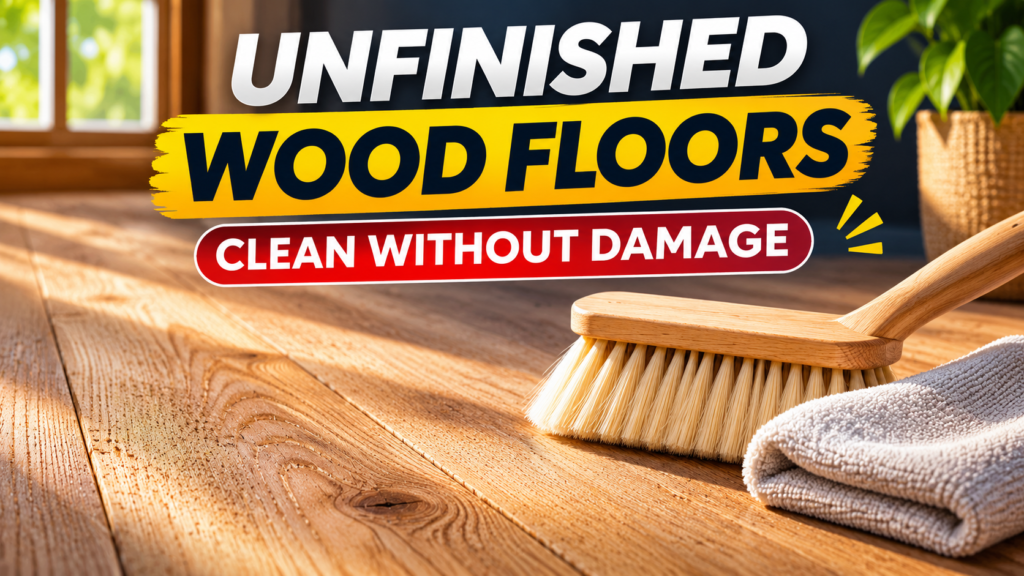
Quick answer: Remove loose dust and grit from unfinished wood floors with a dry microfiber mop, soft broom or bare-floor vacuum. Promptly blot spills instead of wet mopping. Raw wood is porous, so water, vinegar, steam and unsuitable oils can cause staining or damage.
Unfinished wood versus finished hardwood
Finished hardwood usually has a protective film or manufacturer-specified surface treatment. Unfinished timber may have exposed pores, a matte texture and no barrier against liquid. A surface may look matte but still have an oil finish, so do not diagnose the treatment from appearance alone. Check floor documentation before choosing any chemical cleaner.
Routine cleaning: a practical step-by-step plan
- Inspect: Identify loose boards, exposed nail heads, damp areas and existing finish residues. Do not wet clean a damaged or unknown surface.
- Remove grit: Use a clean microfiber dust mop or a vacuum set to hard-floor mode. Be careful around seams.
- Lift debris gently: Use a soft bristle brush in the direction of the wood grain when necessary. Do not rub abrasive grit across the planks.
- Blot spills: Use dry absorbent cloths immediately. Do not leave water or cleaning solution standing on the surface.
- Ask before spot cleaning: If a stain remains, consult the flooring or finish manufacturer about an appropriate treatment.
Why vinegar and a wet mop are poor choices
The National Wood Flooring Association cautions against using vinegar on wood finishes and against standing water on wood floors. Unfinished surfaces are even more vulnerable to absorption. A damp mop that seems harmless once can gradually leave discoloration, roughness or warped boards.
Is linseed oil a wood-floor cleaner?
Linseed oil and other oils can be ingredients in purpose-designed wood finishing systems; they are not universal cleaners. Do not apply a random oil to unknown wood, because it may change the finish, attract dirt or create uneven patches. Follow the chosen finish manufacturer’s application and rag-disposal instructions: oil-soaked rags can pose a fire hazard if handled improperly.
What if the floor has a difficult stain?
For dried mud, remove loose particles first. For water rings, dark stains or a pet accident, stop DIY chemical experimentation. Record the stain’s cause, age and location, and ask the installer or floor professional for treatment advice. Aggressive scrubbing can remove wood fibers and make an isolated mark worse.
When to consider sealing an unfinished wood floor
In busy living spaces, an appropriate professional finish can make routine maintenance more manageable and reduce future staining. The choice depends on the species, intended look, age of the floor, ventilation and installation conditions. Refinishing historic or delicate planks may need specialist advice.
Frequently asked questions
Can I clean unfinished wood with water?
Do not use water as a general cleaning method without manufacturer or professional approval. Blot accidental spills promptly.
Can a robot mop clean raw wood?
A wet robot mop is not suitable for unknown unfinished wood surfaces. Avoid steam and standing water as well.
How often should I sweep?
As often as traffic and dust require. Frequent gentle dry cleaning is safer than infrequent soaking.
Compare three methods for unsealed floors and finished wood floor maintenance.
Sources: National Wood Flooring Association — Maintenance; Bona — Why vinegar and water are not advised for wood flooring.
Editorial note: The main illustration is illustrative artwork, not evidence of a specific cleaning test.